Every crusher owner faces the same question: buy genuine OEM parts, or buy compatible parts from an independent foundry? The answer depends on one thing above all — how confident you are in the supplier. Here is a practical framework for comparing them.
What the price difference actually buys
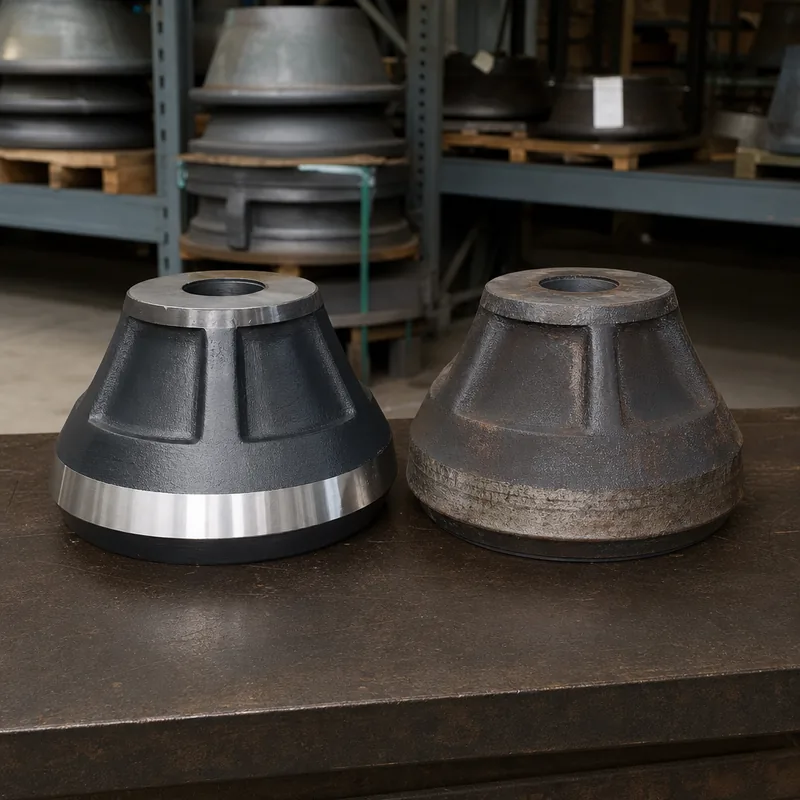
OEM crusher wear parts typically cost 40–60% more than compatible parts. That premium pays for brand, distribution, and a guarantee — but not automatically for better metallurgy. The manganese or chrome iron in an independent foundry’s part can be identical, or even superior, if the foundry controls its chemistry and casting process properly.
The five checks before you buy aftermarket
1. Metallurgy you can verify
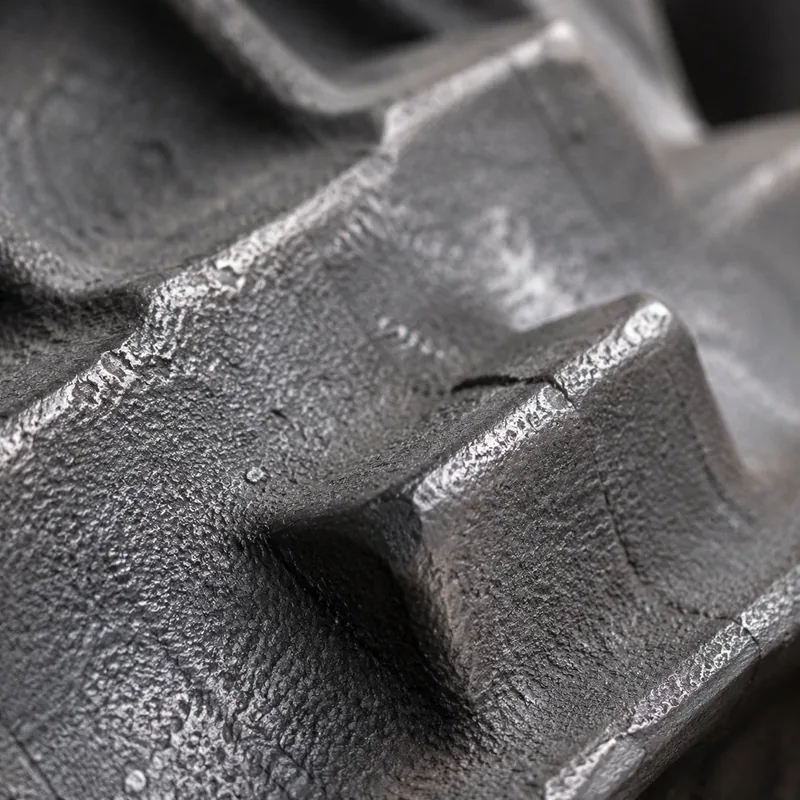
Ask for the chemical composition certificate (CMTR) of the batch. A serious foundry will provide it without hesitation. If a supplier cannot or will not show you the manganese, chromium and carbon content of their parts, that is a red flag.
2. Dimensional accuracy
Wear parts must match the OEM profile or the crusher’s chamber geometry changes, throughput drops, and wear accelerates. Ask how the foundry verifies dimensions — patterns, 3D scanning, or CMM inspection. The answer tells you a lot.
3. Brand compatibility knowledge
“Fits Sandvik and Metso” is marketing. “This is the mantle for the Sandvik H3800, part number 442.8785-01, chamber standard” is knowledge. A good aftermarket supplier knows the part-number systems of the major OEMs and can cross-reference your machine precisely.
4. Warranty and traceability
Every part should be traceable to its heat and inspection records. A confident foundry will stand behind the part and replace it if it fails within the agreed service window under correct operating conditions.
5. Consistency across batches
Foundries with in-house melting, heat treatment and machining control their quality. Suppliers who only trade parts have no control over any of it. Ask who actually casts the part.
When OEM is genuinely better
For structural spare parts — shafts, eccentric assemblies, hydraulic components with tight tolerances and complex heat treatment — the OEM’s engineering and warranty can be worth the premium. Wear parts, by contrast, are a metallurgy game where independent foundries routinely match or beat the OEM.
A balanced procurement strategy
The most cost-effective fleets typically run:
- OEM or premium aftermarket for structural and moving spare parts
- Quality aftermarket for wear parts (mantles, concaves, jaw plates, blow bars)
- A validated supplier list — the same two or three foundries for all wear parts, so quality is consistent
Make an informed decision
Download nothing, buy nothing, until you can answer three questions about any supplier: Who actually casts the part? Can you see the chemical certificate? What happens if the part fails? If the answers are clear, compatible parts are a proven way to cut crushing costs by 20–40% without compromising output.