Mantle and concave replacement is the single biggest consumable cost on most cone crushing plants. The good news is that liner life is not purely a matter of metallurgy — it is heavily influenced by how the crusher is set up and operated. Here are the five practices that have the largest effect.
1. Feed the crusher correctly
A cone crusher performs best with a choke-fed, evenly distributed feed. Running the crusher half-empty makes the mantle and concave wear in a band, shortening life and producing a poor product shape. Always keep the chamber full of material.
2. Match the liner to the chamber
Using a fine chamber liner for a coarse feed forces excessive recirculation and rapid wear. Select the mantle and concave profile (standard, medium, fine, extra fine) that matches your closed side setting and product requirements. If in doubt, your liner supplier should be able to match the original crushing curve by part number.
3. Set the closed side setting correctly
Operating too tight a closed side setting (CSS) for your feed type multiplies stress on the liners and can cause scuffing and early failure. Measure the CSS regularly and adjust it as the liners wear, rather than letting the crusher run until the product drifts out of spec.
4. Keep the wear profile balanced
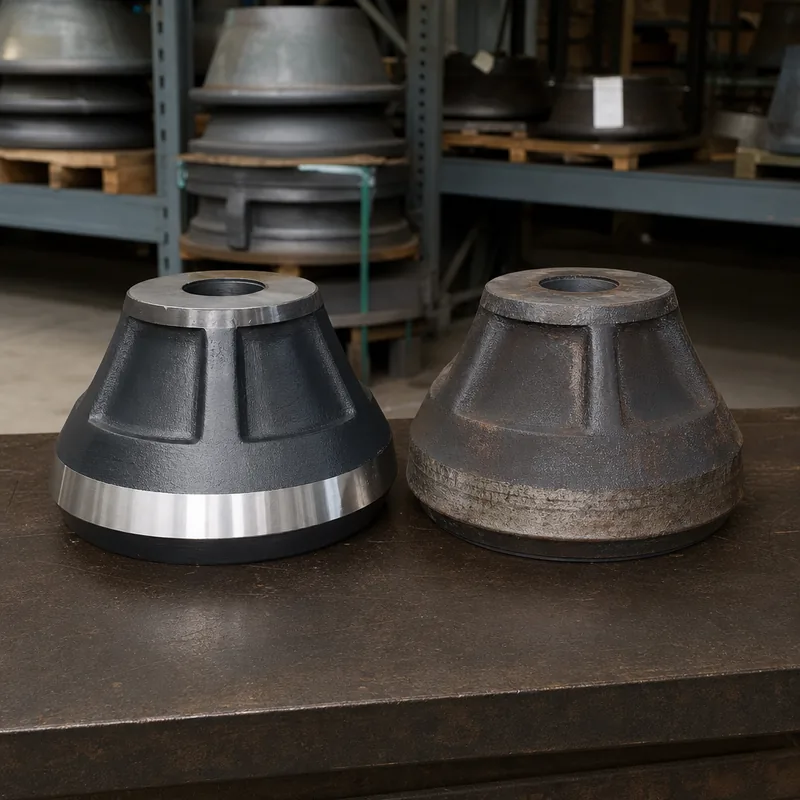
Check mantle and concave wear at each planned shutdown. If one side wears much faster than the other, investigate feed distribution and the crusher’s eccentric throw. A balanced wear profile means you are consuming the full manganese surface — and every tonne of manganese you actually wear out is a tonne you already paid for.
5. Rotate and stock smartly
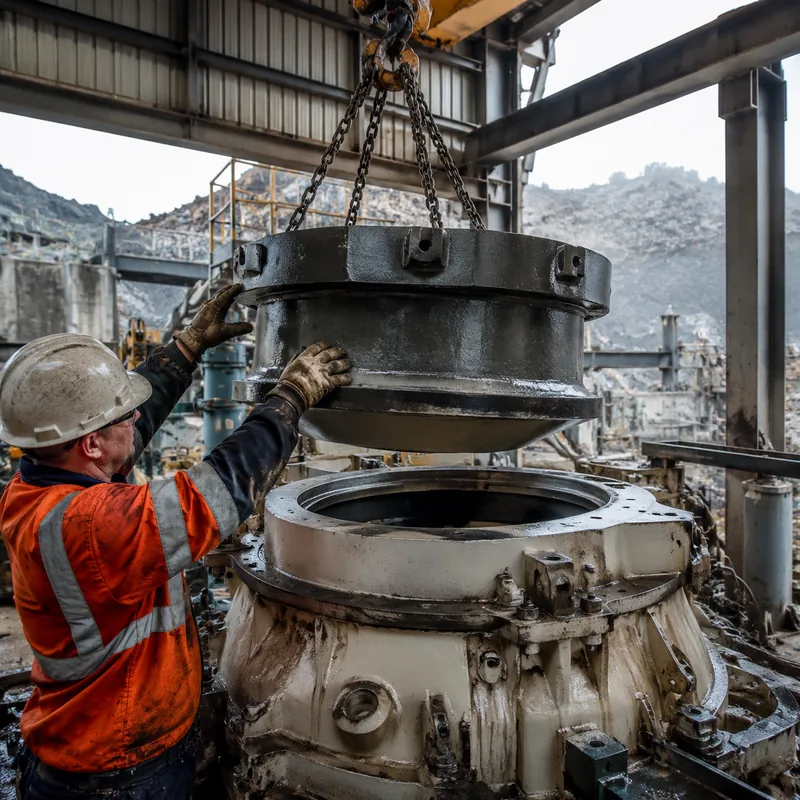
Stock your normal wear set plus one spare set per crusher, so downtime for a liner change never extends into days. Consider rotating liners between crushers running the same model and feed to average out wear differences.
The bottom line
Liner life is a combination of metallurgy + operation. Even the best manganese grade wears quickly on a crusher that is underfed or set incorrectly. Fix the operation, choose the right alloy, and track your cost per tonne — that is the formula for genuinely lower crushing costs.
If you want a second opinion on your liner wear pattern, send us photos of your worn parts together with your crusher model and settings. Our engineers will tell you what the wear profile means and recommend the right part.