Every crusher wear part starts with a metallurgical decision. The alloy you pick determines how long the liner lasts, how much it costs, and — most importantly — your cost per tonne of crushed material. Two families dominate the market: high-manganese steel and chrome white iron. They are not interchangeable, and choosing the wrong one is one of the most expensive mistakes a quarry can make.
High manganese steel: the work-hardening champion
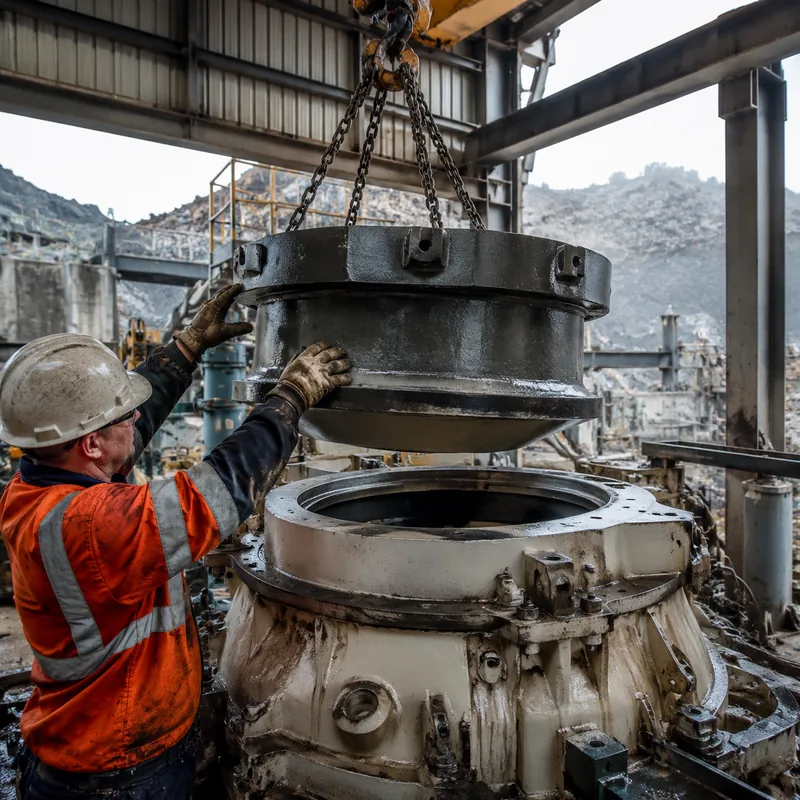
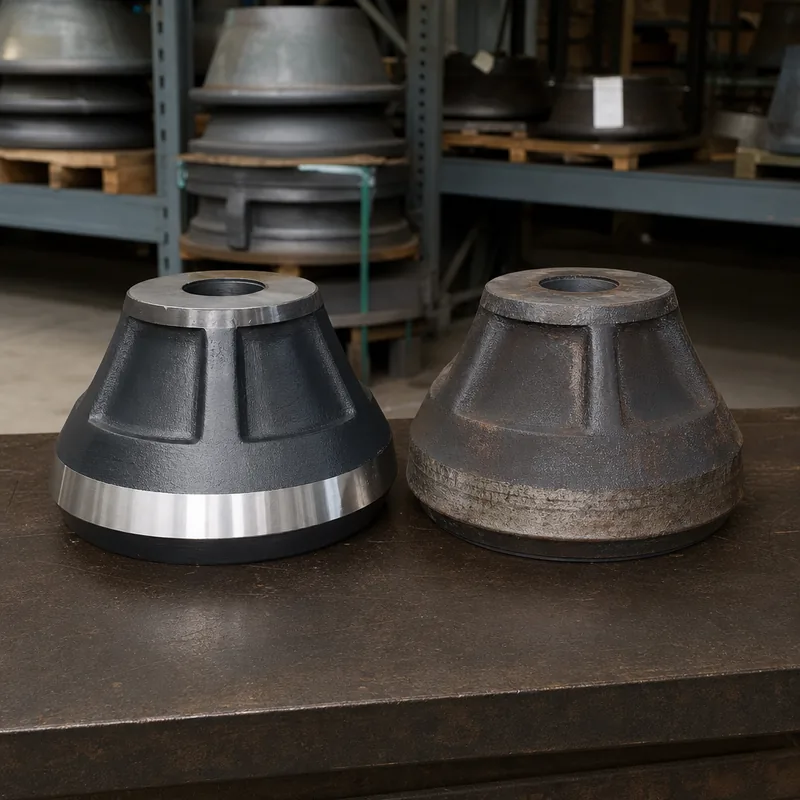
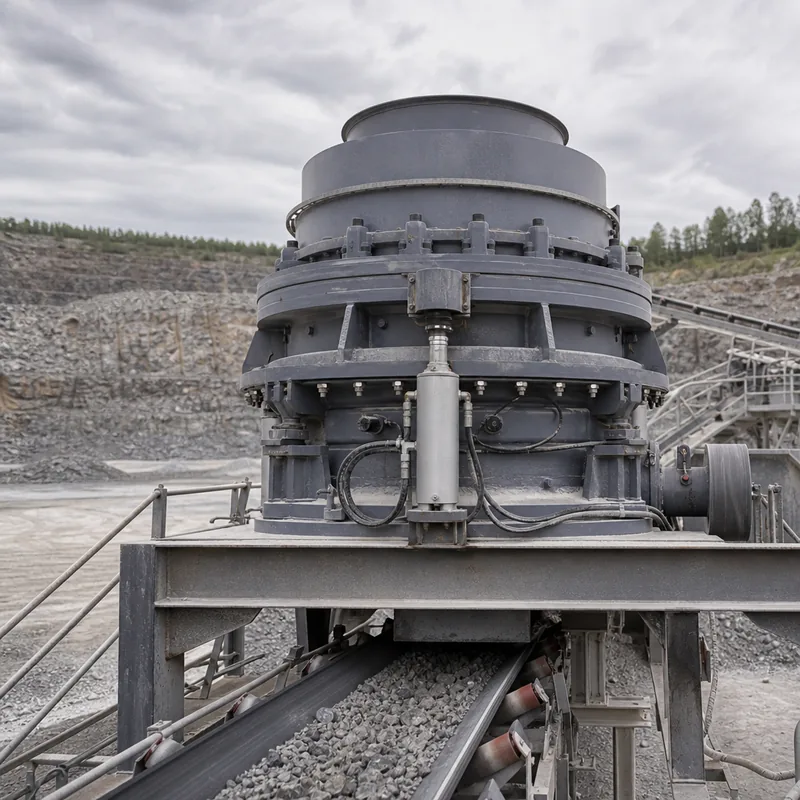
High-manganese steel, commonly specified as Mn18Cr2 or Mn22Cr2, is the default material for cone and jaw crusher liners. Its defining behavior is work hardening: under repeated high-pressure impact, the surface layer transforms and hardens dramatically — from roughly 200 HB to as high as 450–550 HB — while the core remains tough and crack-resistant.
Best applications:
- Cone crusher mantles and concaves
- Jaw plates, cheek plates and toggles
- Impact crushers crushing hard rock
- Anywhere high impact pressure is present
Manganese steel’s toughness makes it the right choice when feed is large, hard, or contains occasional tramp metal that would shatter a brittle liner.
Chrome white iron: abrasion over impact
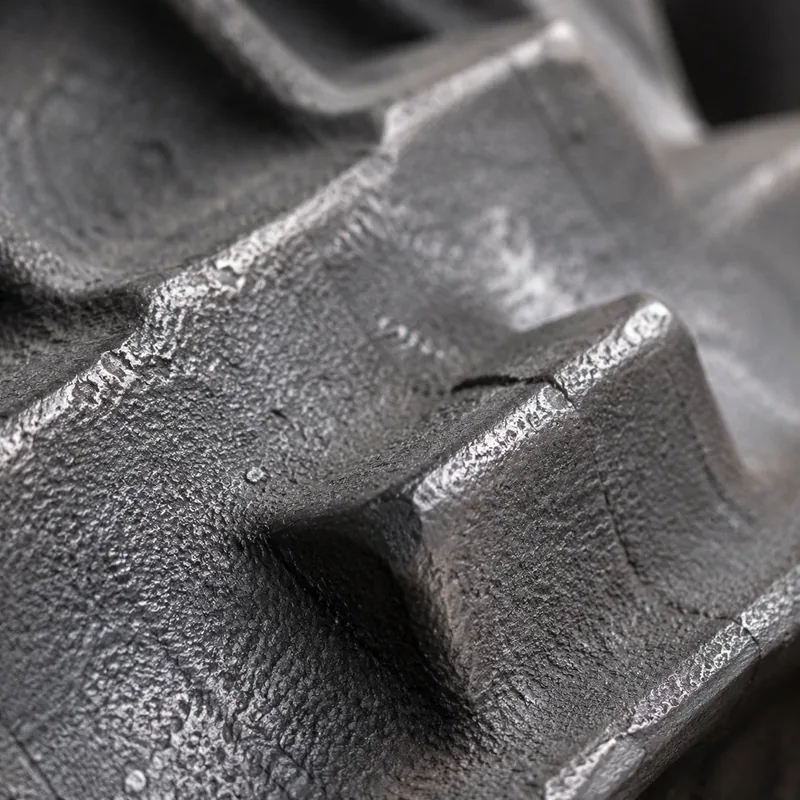
Chrome white iron (commonly M19 or M21 in North America, or Cr26–Cr30 grades in Europe) is a cast iron with high chromium content that forms extremely hard carbide structures. It resists abrasive wear — sliding and gouging — much better than manganese steel, but it is brittle and performs poorly under repeated high impact.
Best applications:
- Blow bars and impact plates in recycling applications
- Soft-to-medium abrasive feed (limestone, gravel)
- Liners subject to high-velocity particle impact rather than pressure
If you feed a chrome bar large, hard rocks, expect premature breakage. Match chrome iron to the application, not the part name.
How to decide: a practical checklist
| Condition | Recommended material |
|---|---|
| High impact, hard feed, tramp metal risk | Manganese steel (Mn18Cr2 / Mn22Cr2) |
| High abrasion, low impact, soft rock | Chrome white iron |
| Recycling (concrete, asphalt) | Ceramic-insert composite bar |
| Extremely abrasive + moderate impact | Manganese with molybdenum (Mn18Cr2Mo) |
The cost-per-tonne perspective
A cheaper liner that fails early is not cheap. Track service life in operating hours and throughput — not just the purchase price. Two liners with the same purchase price can differ by 40–60% in actual cost per tonne depending on how well the material matches your feed.
At Vulcan Wear Parts we manufacture both material families in-house, so our engineers can recommend the alloy that genuinely fits your crushing circuit — and match it to the OEM part number you already use.
Talk to a wear specialist
Unsure which material suits your operation? Send us your crusher model, feed size and current liner life, and we will recommend the right manganese grade or chrome iron — along with a quotation. Every inquiry is answered by an engineer, not a salesperson.