If you are setting up a crushing plant — or planning the next expansion — the first equipment decision is usually “jaw or cone?” The short answer: you almost always need both. They operate in different stages of the crushing circuit and are not interchangeable.
The jaw crusher: the primary stage
A jaw crusher is a compression machine built for the first stage of crushing. Rock enters the top of the V-shaped chamber between the fixed and moving jaw plates and is broken by huge compressive forces. Jaw crushers are designed to handle the biggest feed — often up to 1 meter or more — and reduce it to a coarse product ready for secondary crushing.
Key wear parts: fixed and swing jaw plates, cheek plates, toggle plate.
Best for: hard, abrasive rock; large feed size; mining and quarry primary stations.
The cone crusher: the secondary and tertiary stage
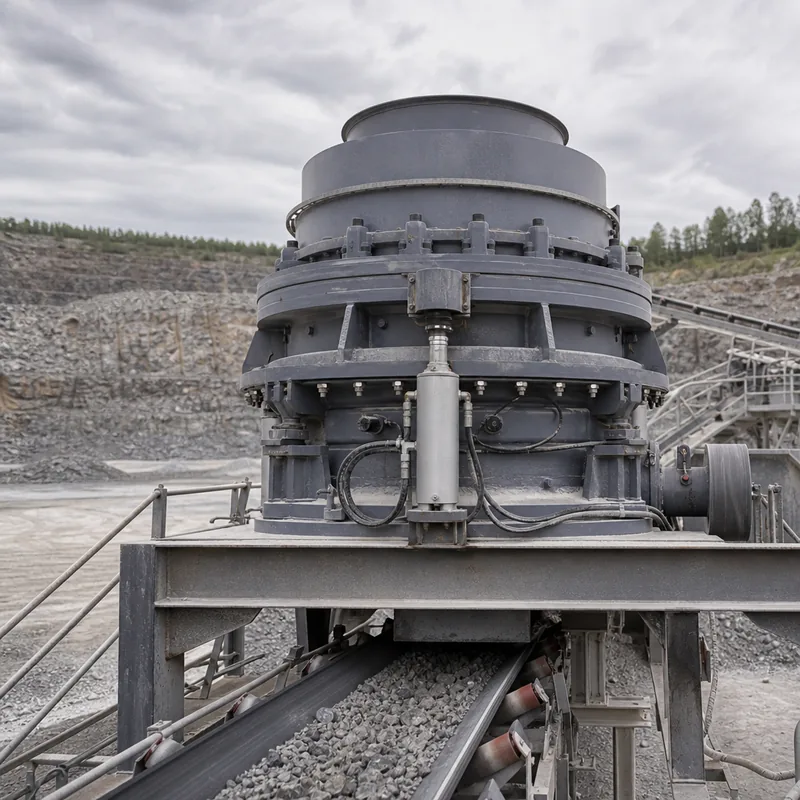
A cone crusher is also a compression machine, but it crushes finer and at much higher reduction ratios. Material is squeezed between a rotating mantle and a stationary concave. Cone crushers are the workhorse of secondary, tertiary and quaternary stages, producing a well-shaped, evenly sized product for aggregates and downstream milling.
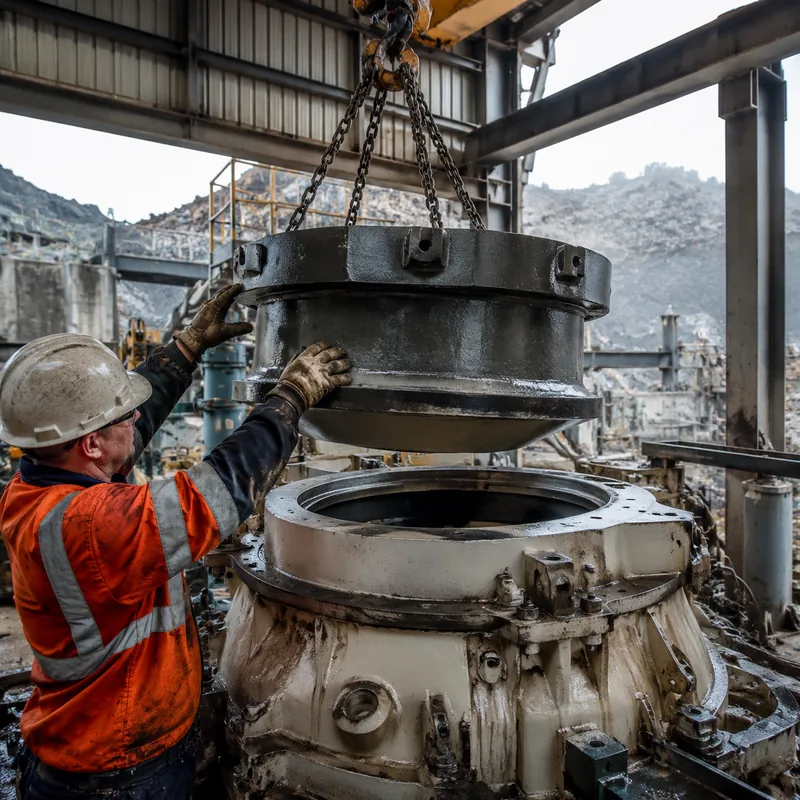
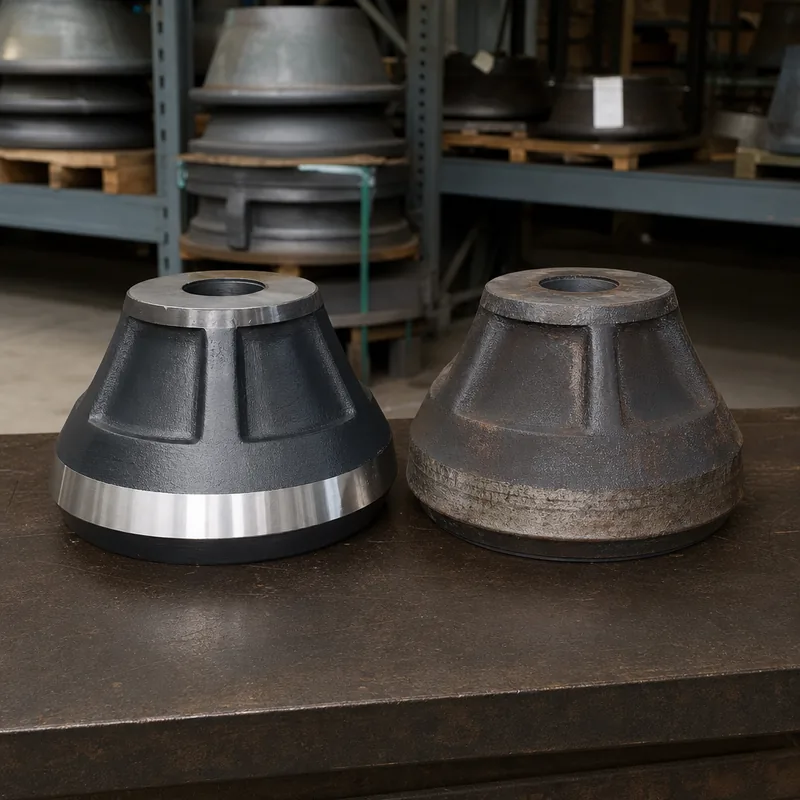
Key wear parts: mantle, concave (bowl liner), arm liners, torch ring.
Best for: medium and fine crushing; consistent product shape; high-tonnage circuits.
How they work together
A typical stationary crushing circuit looks like this:
- Primary: jaw crusher reduces run-of-mine rock to 100–250 mm
- Secondary: cone crusher reduces it further to 40–100 mm
- Tertiary/Quaternary: cone crushers produce the final aggregate sizes
Each stage has a different wear pattern and a different set of wear parts — which is why maintaining the right stock of liners per stage is essential to keep the plant running.
Which one do you buy first?
- Greenfield site, single machine budget: start with a jaw crusher if feed is large; consider a cone if you will feed it with pre-crushed or recycled material.
- Expanding an existing plant: add the stage that is currently the bottleneck. If the primary produces material the cone cannot keep up with, upgrade the cone stage and its liner program.
- Portable plants: self-contained jaw-cone combinations are common and let you relocate the whole circuit.
Wear parts planning, not just machine purchase
Whichever crusher you choose, its long-term running cost is decided by the wear parts program. For every machine you buy, plan ahead:
- Know the part numbers of the liners you will need (mantle, concave, jaw plates)
- Carry one full wear set plus a spare per crusher
- Match the manganese grade and chamber profile to your actual feed
At Vulcan Wear Parts we carry wear parts for the full Sandvik, Metso/Nordberg and Symons ranges, so when your liners wear out — whether jaw plates or cone mantles — the right manganese part is ready to ship.